
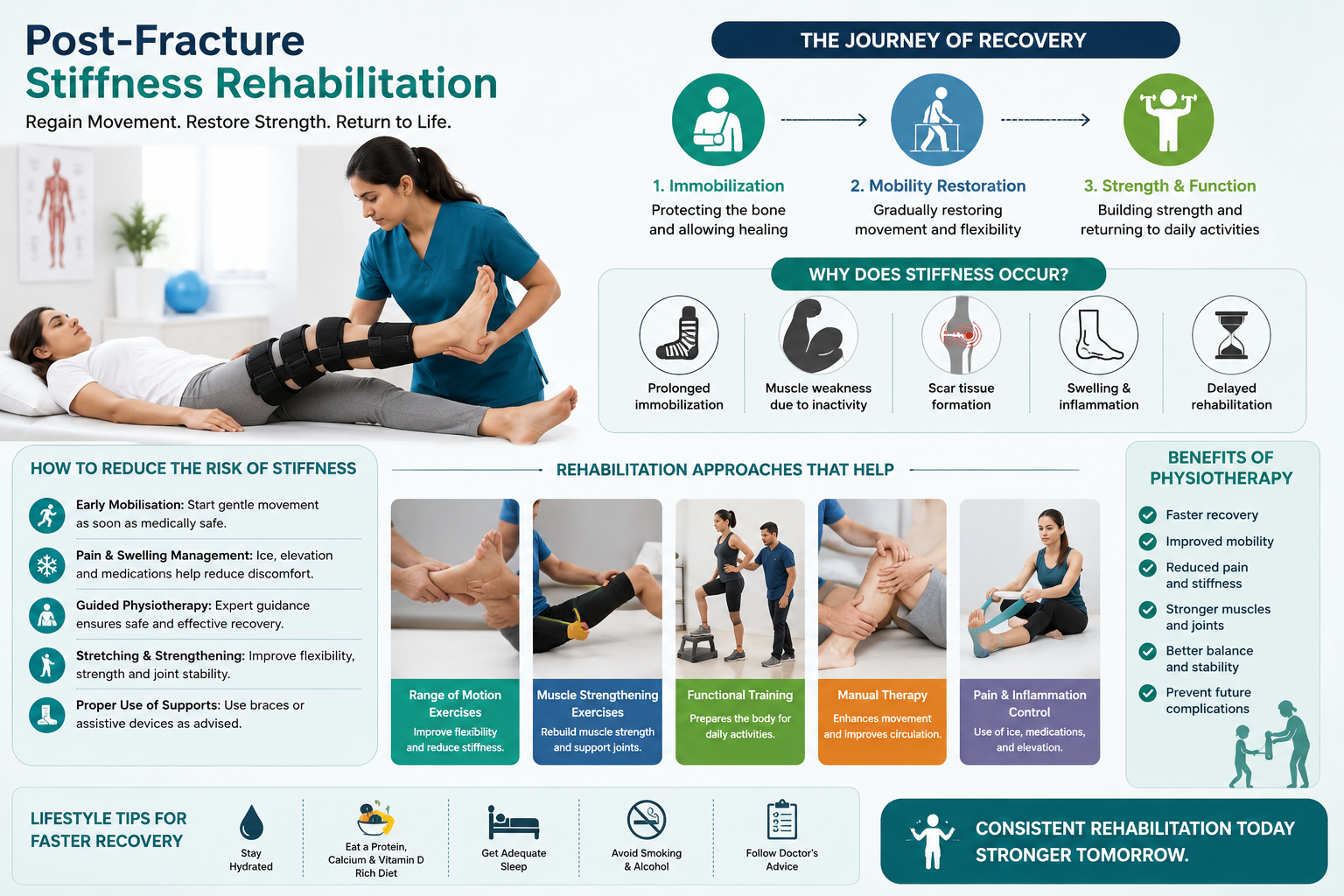
Recovering from a fracture is more than just waiting for the bone to heal. Many people experience stiffness, reduced mobility, and muscle weakness after the cast is removed. Without proper rehabilitation, these issues can affect daily activities and slow down recovery. This guide explains why post-fracture stiffness occurs and how effective rehabilitation can help restore movement, strength, and confidence.
Understanding the Stages of Fracture Recovery
Fracture healing typically progresses through several phases:
1. Immobilization Phase
During the initial healing period, the injured area is often placed in a cast, splint, or brace. While this protects the bone, it also limits movement, which can lead to stiffness and muscle weakness.
2. Mobility Restoration Phase
Once the bone begins to heal, controlled movement is gradually introduced. This stage focuses on restoring joint flexibility and preventing long-term movement restrictions.
3. Strength and Functional Recovery Phase
The final stage involves rebuilding muscle strength, improving balance, and restoring the ability to perform everyday activities comfortably and safely.
Why Does Stiffness Occur After a Fracture?
Post-fracture stiffness is a common problem caused by several factors:
- Prolonged immobilization of joints and muscles
- Muscle weakness due to inactivity
- Scar tissue formation around the injury
- Swelling and inflammation
- Reduced circulation during recovery
- Delayed rehabilitation or lack of exercise
When joints remain inactive for an extended period, surrounding tissues can become tight, making movement difficult even after the bone has healed.
Risk Factors for Post-Fracture Stiffness
Some individuals are more likely to develop stiffness after a fracture, including:
- People with fractures involving joints such as the wrist, ankle, elbow, or knee
- Older adults with reduced flexibility
- Individuals with arthritis or diabetes
- Patients who remain immobilized for long periods
- Those who avoid movement due to pain or fear of re-injury
Recognizing these risk factors early can help prevent long-term complications.
Effective Ways to Reduce Stiffness After a Fracture
Start Movement Early (When Approved by Your Doctor)
Gentle movements introduced at the appropriate time help maintain joint flexibility and prevent stiffness from worsening.
Control Pain and Swelling
Managing inflammation is essential for comfortable movement. Common methods include:
- Ice therapy
- Elevation of the affected limb
- Prescribed medications
- Compression techniques when recommended
Follow a Structured Physiotherapy Program
A rehabilitation plan designed by a physiotherapist ensures exercises are performed safely and effectively while supporting proper healing.
Perform Stretching and Strengthening Exercises
Targeted exercises help:
- Improve flexibility
- Restore muscle strength
- Enhance joint stability
- Reduce recovery time
Use Supportive Devices Correctly
Braces, walkers, or other assistive devices should only be used according to professional guidance to avoid unnecessary dependence.
Rehabilitation Techniques That Improve Recovery
Range of Motion Exercises
These exercises help restore normal joint movement and reduce stiffness.
Muscle Strengthening Exercises
Progressive resistance exercises rebuild muscle mass and support injured joints.
Functional Training
Activity-based rehabilitation prepares patients for daily tasks such as walking, climbing stairs, and lifting objects.
Manual Therapy
Hands-on techniques performed by physiotherapists can improve mobility, reduce tightness, and enhance circulation.
The Importance of Physiotherapy in Fracture Recovery
Physiotherapy plays a critical role in helping patients regain normal movement after a fracture. A personalized rehabilitation program can:
- Accelerate recovery
- Improve flexibility
- Reduce pain and stiffness
- Restore muscle strength
- Prevent future complications
Regular physiotherapy sessions help patients safely progress through each stage of recovery while minimizing the risk of re-injury.
Lifestyle Tips for Faster Recovery
In addition to rehabilitation exercises, consider these healthy habits:
- Stay hydrated
- Eat a protein-rich diet
- Consume calcium and vitamin D-rich foods
- Get adequate sleep
- Avoid smoking and excessive alcohol consumption
- Follow your doctor's recommendations consistently
These factors support bone healing and overall recovery.
Frequently Asked Questions
How long does stiffness last after a fracture?
The duration varies depending on the severity of the injury and rehabilitation efforts. Most people notice gradual improvement within weeks to months.
Can stiffness become permanent?
Yes, untreated stiffness can become long-term. Early intervention and consistent rehabilitation significantly reduce this risk.
Is physiotherapy necessary after every fracture?
Not always, but fractures involving joints or prolonged immobilization often benefit greatly from professional physiotherapy.
What exercises are best for reducing stiffness?
Gentle stretching, range-of-motion exercises, strengthening exercises, swimming, and low-impact activities are commonly recommended.
Conclusion
Post-fracture stiffness is a common challenge, but it doesn't have to limit your recovery. With timely rehabilitation, guided physiotherapy, proper exercises, and consistent effort, most individuals can regain full mobility and return to their normal lifestyle. The key is to begin rehabilitation at the right time and stay committed to the recovery process for the best possible outcome.